
Spring Garden Dangers: The Common UK Plants That Are Toxic to Your Dog by Anna Hope
The sun is finally shining, you’ve made a fresh cup of tea, and you’re ready to relax in the garden. But before you’ve even sat down, you spot your dog halfway into a flowerbed, enthusiastically munching on a mystery leaf.
Sound familiar?
It is brilliant seeing the garden come back to life in spring, but it can also be a bit of a minefield for dog owners. Over my 13+ years as a dog coach, I’ve worked with hundreds of families on "leave it" and "drop it" cues. When I combine my IMDT training and Forensic Psychology degree to look at why dogs do this, it usually boils down to pure curiosity or boredom. But when it comes to your spring borders, a curious sniff or a cheeky nibble can quickly turn into a terrifying dash to the vet.
A lot of the beautiful, common plants we buy from local UK garden centres are actually highly toxic—and in some cases, fatal—to our dogs.
To make your life easier (and safer!), I have put together a quick checklist of what to watch out for before you let them loose on the lawn.
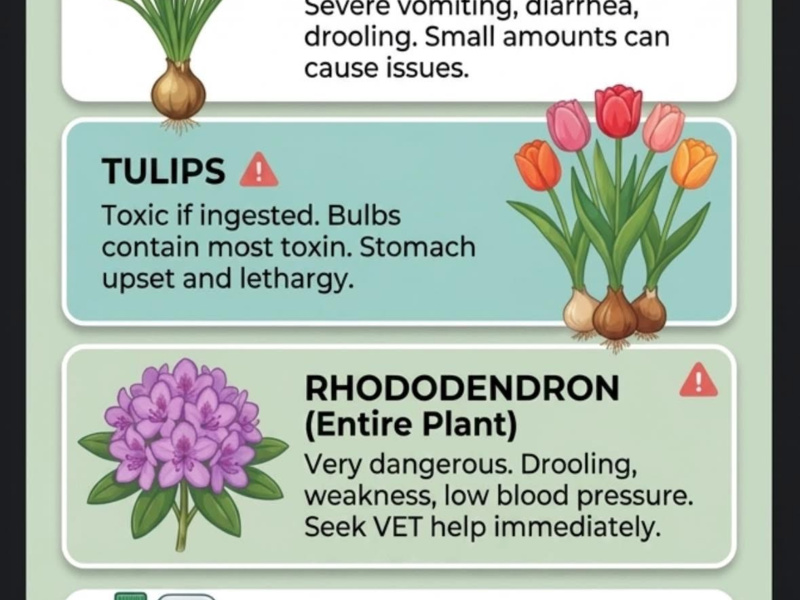
The Heavy Hitters (From Our Infographic):
-
Daffodils (The Bulbs are Worst): Severe vomiting, diarrhoea, and drooling. Even small amounts can cause major issues.
-
Tulips: Toxic if ingested. The bulbs contain the most toxin, leading to stomach upset and lethargy.
-
Rhododendron (Entire Plant): Very dangerous. Causes drooling, weakness, and low blood pressure.
-
Slug Pellets & Garden Chemicals: Highly toxic. Can cause twitching, seizures, and breathing difficulties. Fatal if untreated.
Other Common Garden Centre Culprits You Need to Know:
-
Lilies: Highly toxic. Even just grooming the pollen off their coat can cause severe, life-threatening kidney failure.
-
Foxgloves: Beautiful cottage garden staples, but highly poisonous. Ingestion can cause heart issues, vomiting, and diarrhoea.
-
Hydrangeas: Contain a cyanide-like compound. Eating the leaves or flowers can cause lethargy, vomiting, and stomach upset.
-
Ivy (Hedera helix): Both the foliage and berries are toxic, causing severe stomach upset, drooling, and skin irritation.
-
Lily of the Valley: Contains toxins that cause vomiting, diarrhoea, and severe heart rhythm abnormalities.
-
Chrysanthemums: Very common in pots and borders. Can cause vomiting, diarrhoea, and a loss of coordination.
-
Hostas: A shady garden favourite, but toxic to dogs, causing vomiting and diarrhoea if eaten.
-
Wisteria: A popular climber, but the seeds and pods are particularly toxic and cause severe stomach pain and vomiting.
-
Yew (Taxus baccata): Extremely toxic hedges. Eating the needles or berries can cause dizziness, breathing issues, and can be fatal.
-
Lupins: Common in summer borders. Can cause lethargy, loss of coordination, and in severe cases, convulsions.
🚨 DISCLAIMER: If you ever suspect your dog has eaten any of these, do not wait for symptoms to appear. Contact your vet immediately!
Need help stopping your dog from eating everything in sight?
If your dog treats the garden like an all-you-can-eat buffet and you are terrified they are going to swallow the wrong thing, it might be time to brush up on some training.
Send me an email HERE today to chat about 1-to-1 dog coaching.
Together, we can build a rock-solid "leave it" cue so you can finally relax with that cup of tea! ☕🐾